

The National Research Council (CNR) participates in InFlaMe with two different institutions.
The Institute of Molecular Genetics “Luigi Luca Cavalli-Sforza” of the National Research Council (IGM-CNR) is a multidisciplinary center for the study of both normal and pathological cells with a systemic approach. IGM-CNR is directly involved in scientific training in genetics and molecular biology at the undergraduate, graduate and post-doctoral levels, with about 80 PhD students, fellows and students of master being involved annually in research activities. IGM-CNR is located in Pavia and has access to the facilities of the University of Pavia and the Institute of the Italian Foundation for Cancer Research (IFOM) key for activities in InFlaMe.

Dr. Emmanuele Crespan
Emmanuele Crespan is PI of the Drug Development and DNA Damage Repair group at IGM-CNR (Istituto Genetica Molecolare "Luigi Luca Cavalli-Sforza"). In collaboration with various medicinal chemistry groups, he is involved in the development and characterisation of the mechanism of action of new anticancer and antiviral inhibitors. Within the InFlame project, he aims to identify the host partners of Dengue and West Nile non-structural proteins using a Bio-ID approach (WP5).
The Institute on Atmospheric Pollution of the CNR (CNR-IIA) was established in the late 60s. Its mission is part of a highly topical framework for the ecosystemic balance of the planet. CNR-IIA is focused on the development of methods and new innovative technologies for the determination of the concentrations of many organic and inorganic pollutants present in the atmosphere.
Moreover, CNR-IIA has great expertise in the sharing and processing of Big Earth Data from Earth Observation (EO) for multi- and interdisciplinary applications and developed tools for model-driven applications for interdisciplinary applications. In InFlaMe, CNR-IIA coordinates the tasks that will deal with the development of data-driven methodologies for estimating the impact of climate change on the epidemic/pandemic risk from Flavivirus (Dengue, West Nile).
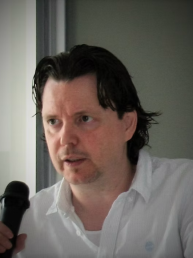
Paolo Mazzetti
Paolo Mazzetti is Acting Director of CNR-IIA. He holds a degree in in Electronic Engineering and a degree in Philosophy of Science. He taught “Telematics” at the University of Florence at Prato for a degree in Information Engineering for seven years. His research activities focus on the integration of information science and technologies with Earth and environmental sciences for the generation of actionable knowledge from Big Earth Data. He has more than fifteen years of experience in the design and development of infrastructures and services for geo-spatial data sharing and processing in the context of national, European (FP7, CIP, H2020, HORIZON) and global initiatives. He has been Principal Representative of Italy in the GEO (Group on Earth Observation) Programme Board. He is the co-chair of the GEOSS Platform Operation Team (GPOT) and member of the GEOSS Infrastructure Development Task Team (GIDTT). In the InFlaMe project, he will contribute to WP6 and, in particular, to tasks T6.5 and T6.6 dealing with the development of data-driven methodologies for estimating the impact of climate change on the epidemic/pandemic risk from Flavivirus (Dengue, West Nile).
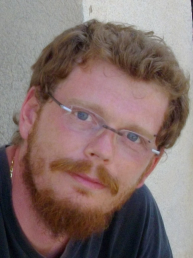
Mattia Santoro
Principal investigator of InFlame for CNR-IIA. Mattia Santoro is researcher at the Division of Florence of CNR-IIA. He has a Ph.D. in Methods and Technologies for Environmental Monitoring at the University of Basilicata, Italy. He obtained a degree in computer science at the University of Florence, Italy. He has been working at the Earth and Space Science Informatics Laboratory (ESSI-lab) of the National Research Council of Italy (CNR) since 2007. His research interests deal with multidisciplinary interoperability, designing and developing infrastructures and services for geo-spatial resources, with particular focus on semantic discovery and environmental models interoperability. He coordinates the Geospatial Artificial Intelligence and Information Sharing (GAINS) Working Group of the CNR-IIA. He participated in several research projects and initiatives funded by EC (FP7, H2020, HORIZON), US NSF, and National R&I frameworks. He coordinates the design and development of the VLab framework. He is member of GEOSS Platform Operations Foundational Task GEOSS Platform Operations Team and of the GEOSS Infrastructure Development Task Team. In the InFlaMe project, he will contribute to WP6 leading the activities of tasks T6.5 and T6.6 dealing with the development of data-driven methodologies for estimating the impact of climate change on the epidemic/pandemic risk from Flavivirus (Dengue, West Nile).


