
Addressing flavivirus threats through the development of new therapies that stem from a better understanding of virus-host interactions.
Addressing flavivirus threats through the development of new therapies that stem from a better understanding of virus-host interactions.
COUNTER-ACTING THE PANDEMIC POTENTIAL OF FLAVIVIRUSES: ADDRESSING VIRUS-HOST INTERACTIONS AND DEFENCE STRATEGIES TO DESIGN NEW THERAPEUTICS AGAINST WNV AND DENV
COUNTER-ACTING THE PANDEMIC POTENTIAL OF FLAVIVIRUSES: ADDRESSING VIRUS-HOST INTERACTIONS AND DEFENCE STRATEGIES TO DESIGN NEW THERAPEUTICS AGAINST WNV AND DENV
To enhance the EU's capability in combating West Nile and Dengue virus epidemics and pandemics, and to develop effective emergency response plans.
Consortium

(INGM)

(INN-ACTA)

(IP)

(MUW)

(MU)

(IMAGINE)

(IZSLER)

(CNR)

(CIC-BIOGUNE)

(UNIFI)

(IRCCS-OSM)

Problem to be solved
The spread of Flaviviruses has surged in recent decades, impacting millions and causing hundreds of thousands of deaths. Dengue virus is now endemic in over 100 countries across tropical and subtropical regions in Southeast Asia, Africa, the western Pacific, and the Americas.
Flaviviruses have a significant economic impact, costing approximately US $12 billion annually. Their epidemic potential is influenced by insect vector characteristics, poor urban planning, geographical spread due to environmental changes, and extensive global travel.
Despite the deleterious impact of flaviviral infection on human and animal health, the measures to control these viruses are still limited.
Starting
1st December 2024
Duration
48 Months
Partners
8
Countries
3
Work packages
9
Funding
2.996.312,50 €
News & Events
MUW team represented InFlaMe at the IRC Retreat
The MUW team represented InFlaMe at the Retreat of the Immunology Research Cluster (IRC) of the Medical University of Vienna, June 26, 2026.…
IZSLER represented InFlaMe at the EOHA meeting 2026
Ana Moreno (IZSLER) represented the InFlaMe consortium at the European One Health Association EOHA meeting, Madrid (Spain), May 18-20, 2026 with the…
MUW at the ÖGHMP Annual Meeting
InFlaMe was represented by MUW at the Annual Meeting of the Austrian Society for Hygiene, Microbiology and Preventive Medicine (ÖGHMP) (18–20 May…

MUW attended the EURL
Judith Aberle and David Florian, members of the research team led by Judith Aberle from MUW attended the European Union Reference Laboratory (EURL)…

MUW and IRCCS OSM participated in the ESCMID Global 2026
The MUW team, Judith Aberle, Karin Stiasny and David Florian, a member of the research team led by Judith Aberle participated in the ESCMID Global…
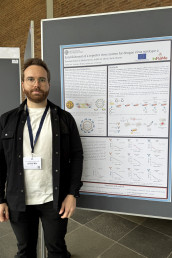
MUW participated at the 35th Annual Meeting of the Society for Virology
Dominik Moll, (a member of the research team led by Karin Stiasny) from MUW participated at the 35th Annual Meeting of the Society for Virology (GfV,…
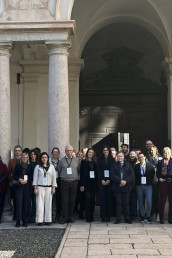
First Annual Meeting Pavia 2026
On 17–18 February 2026, the InFlaMe consortium gathered in Pavia, Italy, for its 1st Annual Meeting at Collegio Ghislieri.The event brought together…
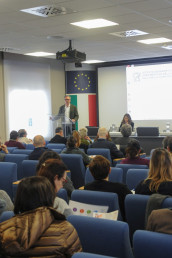
Training Event at IZSLER
On 29 January 2026, IZSLER - Istituto Zooprofilattico Sperimentale della Lombardia e dell'Emilia Romagna organised a training event focused on…