

UNIFI has its origins in the Studium Générale that the Florentine Republic established in 1321, with disciplines taught at the time being civil and canon law, literature and medicine. In 1924, a special decree officially instituted the University. Today, UNIFI is one of the largest research and higher education organisations in Italy, with 1,800 lecturers and researchers, around 1,600 technical and administrative staff, and over 1,600 doctoral and post-doctoral students.
Researchers at UNIFI belong to 21 departments and have access to around 40 research facilities, including inter-departmental and inter-university centres, as well as research, transfer and higher education centres.
The Chemistry Department of UNIFI plays a key role in InFlaMe activities, thanks to the access to all materials and labs for organic synthesis, purification and characterization of synthesis, and for functionalization of glycans, as well as access to NMR instrumentations and the EU infrastructure INSTRUCT for high field spectroscopic studies. The PI of this Unit has a long-lasting experience in glycans’ bioconjugation, glycosylation of proteins and peptides and glycosylation of multivalent nanomaterials.
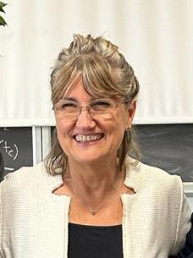
Prof. Cristina Nativi
Cristina Nativi is a full Professor of Organic Chemistry at UNIFI. Her research focuses on saccharidic anti-pathogens, antigen mimetics for immunotherapy, molecular recognition of carbohydrates, and saccharidic inhibitors of Matrix Metalloproteinases. In InFlaMe, the team of Prof. Nativi has a key role in activities in WP5 (Virus-host interactions and drug development) centred on synthesis of multivalent sulfated fucosides, glycosyl peptides & glycosylation of proteins.

Prof. Marco Fragai
Marco Fragai, Associate Professor of Inorganic Chemistry (UNIFI), will contribute to activities in WP5, with activities focused on endogenous or isotopically enriched proteins’ expression (transthyretin) and small molecule-protein binding studies. Prof. Fragai studies protein interactions in cells and the extracellular environment using nuclear magnetic resonance (NMR) to determine the structure and dynamics of proteins and nucleic acids, focusing on drug targets and protein interactions.

Prof. Oscar Francesconi
He is an Associate Professor of Organic Chemistry (UNIFI) and in InFlaMe with the UNIFI team he works on the synthesis of molecules for the modulation of protein-glycan interactions. Prof. Francesconi research is interests are in supramolecular chemistry and physical-organic chemistry, with a focus on the biomimetic recognition of biological relevant molecules such as carbohydrates.


